Your first weeks at a Koszalin gym: the rules nobody writes down
Starting at a gym in Koszalin as a foreigner: why you bring your own padlock and a second pair of shoes, when the place is empty, how to ask to share a bench, and what to train in the first month.
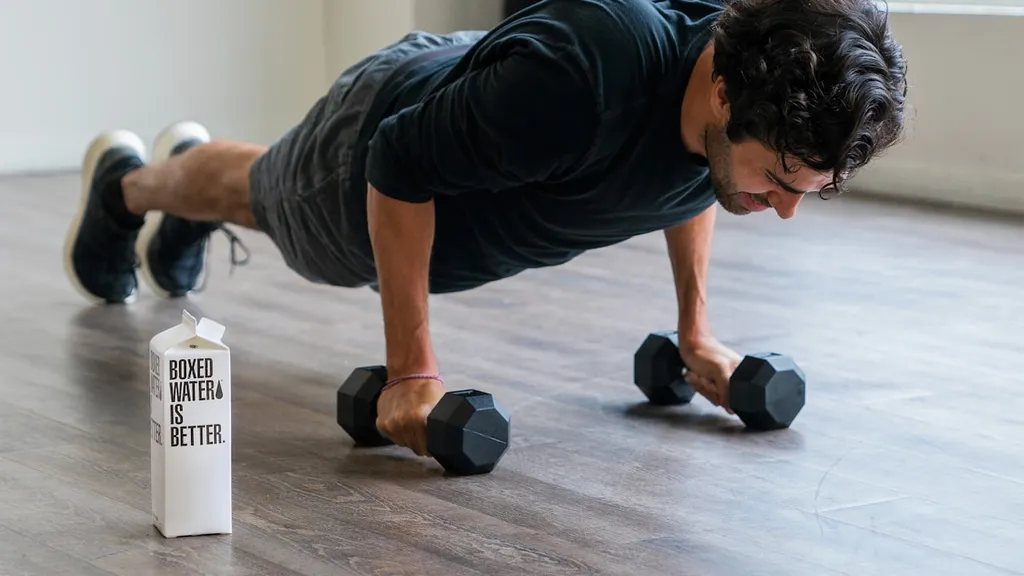
You have paid for a month, you turn up on a Tuesday at six, and the first problem has nothing to do with training. The locker in front of you has a metal hasp and no lock in it. Someone at reception points at your feet and says something you do not catch. Every bench is taken. Learning the exercises turns out to be the easy part of a first week at a Polish gym. What sends people home is the logistics.
The short version: bring your own padlock and a second pair of shoes, or your first visit ends at the changing-room door. Weekday evenings between four and eight are packed; mornings and anything after eight are close to empty. Wipe down whatever you sweat on. Timetables run on the 24-hour clock, so a class listed at 18:00 starts at six in the evening. You need no Polish for any of it — only the local knowledge nobody bothers to write down.
Buy a padlock before you go
The changing room is the szatnia. The doors say szatnia damska for women and szatnia męska for men, and the lockers inside are szafki.
Here is the part that catches out every newcomer: at plenty of Polish gyms the locker has a metal hasp and nothing else. The lock is your job. It is a kłódka, a padlock, and any supermarket or hardware shop sells one for small change. Buy it before your first session, not after you have stood in the changing room with your wallet in one hand and your phone in the other.
Some clubs do it differently. A coin-return lock works like the deposit on a supermarket trolley: drop a coin in, take the key away with you, get the coin back when you return the key. A few places hand out wristbands at reception instead. Send the gym a message and ask which system it runs — we keep no club-by-club record, and the answer changes every time a place is refitted.
Whatever kind of lock ends up on your locker, leave nothing worth stealing behind it.
One note on prices, here and on the door of every gym in the city. Poland uses the złoty, written zł on doors, price lists and receipts; PLN turns up mainly on websites and in banking apps. Every złoty figure in this article is followed by a rough figure in euros.
The shoe rule is not negotiable
Many gyms — and effectively every school and municipal sports hall — ask for obuwie zmienne. It means a second pair of shoes: clean, carried in your bag, put on in the changing room. The shoes you arrived in do not go on the gym floor. The sign at the entrance reads obowiązuje obuwie zmienne, indoor shoes required.
This is not fussiness. Polish towns grit and sand their pavements all winter. Carry that grit in on a sole in February and it chews through a rubber floor, then works its way into the bearings of every machine standing on it.
Turn the rule to your advantage. For lifting, the second pair wants a flat, firm sole. Running shoes put soft, compressible cushioning under your heel, and that is exactly what makes you wobble under a loaded squat. A cheap pair of flat-soled gym shoes will do more for you than any supplement.
When the gym is empty, and how to read the timetable
Weekday demand in Koszalin tracks the working day. Between roughly 16:00 and 20:00 the free-weights area is busy and you will be queuing for a bench. Before 10:00, and from about 20:30 onwards, the same room is nearly empty. Weekend mornings are quiet almost everywhere.
For a beginner this matters more than it sounds. Spend half your evening waiting for equipment and a 45-minute session eats 80 minutes of your day, and long sessions are the ones you start skipping in week three. If your hours bend at all, train off-peak for the first month.
Polish timetables use the 24-hour clock, without exception. A class listed at 18:00 is at six in the evening; 07:30 is half past seven in the morning. There is no am or pm anywhere on the wall. The days come abbreviated too, and you will not guess the short forms from English: pon (Monday), wt (Tuesday), śr (Wednesday), czw (Thursday), pt (Friday), sob (Saturday), niedz (Sunday).
Two habits that keep everyone on your side
Wipe the equipment down when you finish with it. There is a roll of paper towel and a spray bottle of disinfectant on the wall for exactly this. Carry a towel as well — ręcznik — and lay it between you and any bench or backrest you lie on. Of all the etiquette in this article, this is the rule Polish gyms genuinely enforce, and another member will say something if you skip it.
Put the weights back. Plates go back on the rack, dumbbells back on the shelf in the right slot, lightest to heaviest. It costs ten seconds, and it is the whole difference between being a regular and being a nuisance.
Sharing is the third habit, and the only one that needs a word of Polish. At peak hours people take turns on a bench or a machine, each working in during the other’s rest. Have this ready: “Czy mogę się dosiąść?” — roughly, can I join you on this one? Say it, point at the equipment, and expect tak (yes) or jasne (sure). When somebody says it to you, nod and carry on; you are simply taking alternate sets. That one sentence removes most of what is awkward about an evening session.
A mini-glossary of gym Polish
You will meet these on machine labels, in class descriptions and in any plan a trainer writes out for you.
| Polish | English |
|---|---|
| ławka | bench |
| sztanga | barbell |
| hantle | dumbbells |
| bieżnia | treadmill |
| orbitrek | cross-trainer, elliptical |
| wyciąg | cable machine |
| maszyna | machine |
| powtórzenia (powtórki) | reps |
| serie | sets |
A written plan reads like 3 serie po 10 powtórzeń — three sets of ten reps. Once that line makes sense, most Polish training plans do too.
What to train in the first month
Two to three sessions a week, with at least one rest day between strength sessions. That is the honest ceiling for someone starting from nothing, and it is not a compromise: tendons and joints adapt more slowly than lungs do, so you will feel ready for more long before your tissues are.
Spend the first sessions learning movement patterns rather than chasing weight:
- Squat (przysiad) — knees tracking over the feet, spine in its natural curve, weight through the heels.
- Hip hinge and deadlift (martwy ciąg) — the movement comes from the hips, the back stays flat, the bar stays close to your legs.
- Push-up (pompka) — body in one line, elbows at about 45 degrees rather than flared out.
- Plank — core braced, hips neither raised nor sagging, neck neutral.
- Row (wiosłowanie) — flat back, shoulder blades drawing together, elbows travelling close to the body.
After that, progression is the whole game. Add a little weight, or one more rep, only once the last rep of the last set still looks like the first one. Loading a movement you cannot yet control is how beginners buy themselves six weeks off.
Aim for 40 to 50 minutes including the warm-up. Mild soreness for a day or two is normal. Having to take the stairs sideways the next morning means you did too much, not that the session was a good one.
Sleep, and the number worth knowing
Muscle is built on the rest days rather than during the session, and most of that repair happens while you sleep. Seven to nine hours is the range worth protecting. Train hard on five and you collect the fatigue without much of the adaptation.
The second number has nothing to do with training and everything to do with staying the course. In a well-known study of habit formation (Lally et al., 2010), a new behaviour took a median of 66 days to become automatic. Call it two months and change. That is the stretch where the gym stops being an event and starts being Tuesday, and it runs far longer than anyone expects when they buy their first pass. So judge yourself on sessions completed rather than on the mirror: sleep and mood shift within a few weeks, while anything visible takes considerably longer.
One or two sessions with a trainer
You can teach yourself the patterns above from video. What you cannot do is watch your own back angle while you lift. Buy one or two paid sessions early on for that reason alone. Somebody who corrects your positions in week one saves you months of rehearsing a fault.
Settle the language question before you book, and put it in your first message: can we work in English? Do not assume the answer either way. We hold no record of which trainers in Koszalin work in English and which do not, so we are not going to promise it on anyone’s behalf — asking is the only reliable method. If your Polish is thin, write rather than ring. A written message gets you a clearer answer, and it gives both sides time to work it out.
On price, one rate in the city is published openly and the rest are not. Aleksandra Zwolak, who works out of Siłownia 16 (siłownia simply means gym), charges 140 zł for a one-to-one session — about 33 EUR at a rate near 4.3 zł to the euro, and that rate moves. Most trainers here publish nothing at all. They settle on a figure during a first meeting, and that meeting is normally free. If you only want to try a gym on your own first, a single entry starts at 39 zł (about 9 EUR) at MyGym, one of the commercial gyms in the city. Monthly passes (karnet), session packages and the sports card that many Polish employers hand out as a staff perk deserve an article of their own, and we have written it: what training in Koszalin costs.
Where to start
Pick a gym within walking distance of your flat before you weigh up anything else; the journey there decides your attendance far more than the equipment does. Our gyms and clubs page lists venues around the city, the trainer directory shows who works in which discipline, and the personal training listings cover coaches who take complete beginners. If you would rather start with a class than a barbell, kickboxing as a complete beginner covers that route. Our pricing page explains how this directory itself works.
One practical note to finish on. Keep the padlock, the towel and the indoor shoes in your gym bag permanently, and pack it the night before. Almost nobody misses a session in the first month because their willpower collapsed. They miss it because the bag was not ready and the shoes were somewhere else.