Kickboxing in Koszalin as a complete beginner
Starting kickboxing in Koszalin without speaking Polish: how classes are run, what gear you actually need, what the first session looks like and how to ask about trial training.
If you have moved to Koszalin for work or study, combat sports are one of the easier ways into local life. Training is physical, instructions are short and repetitive, and nobody expects you to hold a conversation while you are catching your breath.
The short version: you need no equipment for your first session, only sports clothes and water. Most clubs offer a free or cheap trial class. Classes are taught in Polish, but the vocabulary is small enough that it stops being a barrier within two or three sessions.
Will the language be a problem
Less than people expect, for one practical reason: combat sports are taught by demonstration. The coach shows the movement, you copy it, they correct your position by moving your arm or foot. That works regardless of language.
What helps is knowing a handful of words you will hear on repeat: garda (guard), lewa / prawa (left / right), prosty (straight punch), sierpowy (hook), kopnięcie (kick), zmiana (switch partners), stop. That is genuinely most of it for the first month.
Worth doing before you go: send a short message to the club asking whether the coach speaks English. In Koszalin many younger coaches do, and even where they do not, there is usually someone in the group who will translate the parts that matter.
What the first session looks like
A beginner class runs 60 to 90 minutes and follows a predictable shape: warm-up, technique, work on bags or pads, stretching. On your first day you will realistically learn a stance and one punch. That is the correct pace, not a slow one.
There is no sparring on day one, and there should not be. In a club that handles beginners properly, controlled sparring comes after several weeks, with protective gear and always by mutual agreement. If someone offers you a “light exchange” with an experienced fighter on your first visit, that tells you something about the club rather than about you.
Which format you are actually signing up for
Polish clubs advertise combat sports classes under names that overlap, so it is worth knowing what the differences mean in practice.
| Format | Hands | Legs | Knees and clinch |
|---|---|---|---|
| Boks (boxing) | yes | no | no |
| Kickboxing | yes | above the waist | no |
| Low kick | yes | including thighs | no |
| K-1 | yes | including thighs | knees yes, limited clinch |
| Muay thai | yes | yes | knees and elbows, full clinch |
If you want to strike with your legs but stay out of grappling range, look for classes labelled kickboxing or K-1. If you want the full range including elbows, that is muay thai. Hand technique is close enough between them that switching later costs you nothing.
Gear: what to buy and when
Do not buy a full set on the day you sign up. It is the most common beginner mistake and half of it ends up unused or in the wrong size.
For the first session: training clothes, flat-soled shoes (or bare feet — ask the club), water, a towel.
After two or three sessions, once you know you are staying:
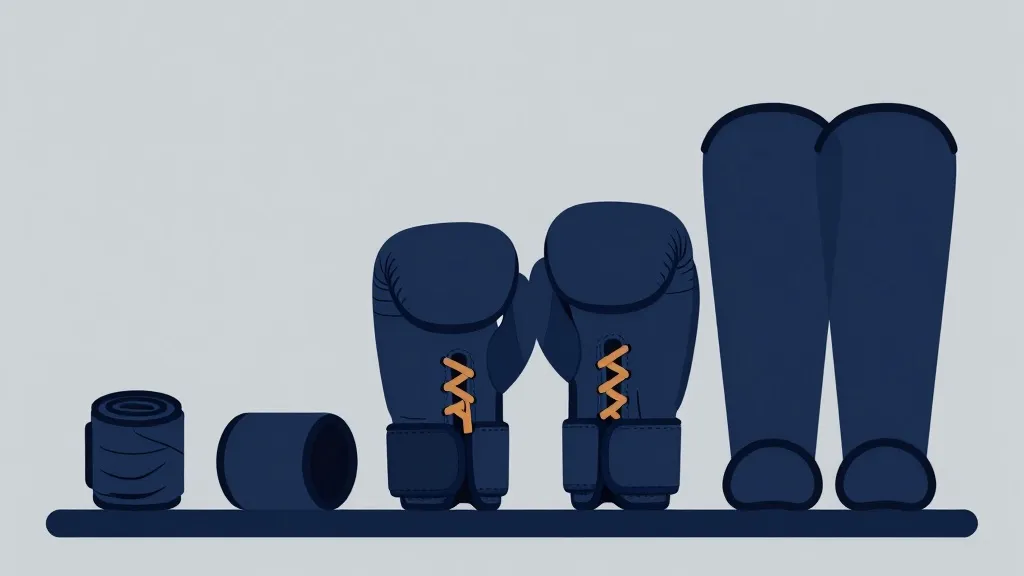
- Hand wraps — the cheapest and most important item. They protect your wrists and knuckles. Buy long ones, 4 to 4.5 metres.
- Gloves — 12 or 14 oz for general training. Smaller gloves are not “better”, just thinner; for bag and pad work you want more padding, not less.
- Mouthguard — the boil-and-bite type, a few euros, needed before your first sparring.
Shin guards, headgear and a groin guard come later, and many clubs lend equipment for the first weeks. Ask before you spend anything.
Costs and how to compare them
Clubs price training in three ways: a monthly pass for group classes, single entries, and one-to-one sessions. The monthly pass is almost always the cheapest per session; single entries make sense only while you are still deciding.
We deliberately do not publish current rates here — they change during the season and vary between clubs more than any average would suggest. Ask two or three places at once and compare how many sessions per week the pass covers, because that number, not the headline price, determines your real cost per training.
One-to-one training costs considerably more, but in combat sports it has a specific value at the start: the coach sees your stance from minute one and corrects errors before they become habits. A practical compromise is two or three individual sessions first, then joining a group.
Finding a club in Koszalin
Koszalin has several clubs running kickboxing, K-1 and related formats — some attached to gyms, some independent boxing and martial arts clubs. Three things worth checking before you commit to a pass:
- Is there a separate beginners’ group? Being dropped into an advanced class is the single most common reason people quit after two weeks.
- Who actually teaches? A competitive record and the ability to teach are different skills. Ask how long the coach has run beginner groups.
- Take two trial sessions at different clubs before buying anything.
You will find training venues on our gyms and clubs in Koszalin page, and coaches working in martial arts in the directory. If you would rather start one-to-one, the coach directory lists people who take complete beginners.
The thing nobody warns you about
Your calves and forearms will ache after the first session — calves from working on the balls of your feet, forearms from holding your guard. That passes within two or three sessions. The harder part is that the second session feels worse than the first: the novelty is gone and the soreness is not. People who get through sessions two and three usually stay for years.