Pre-season conditioning in Koszalin — what people here train for
The amateur sporting year in Koszalin: the running season, the short Baltic summer, the February ski trip and the indoor winter leagues — plus how to enter a Polish race as a foreigner and how far ahead to start.
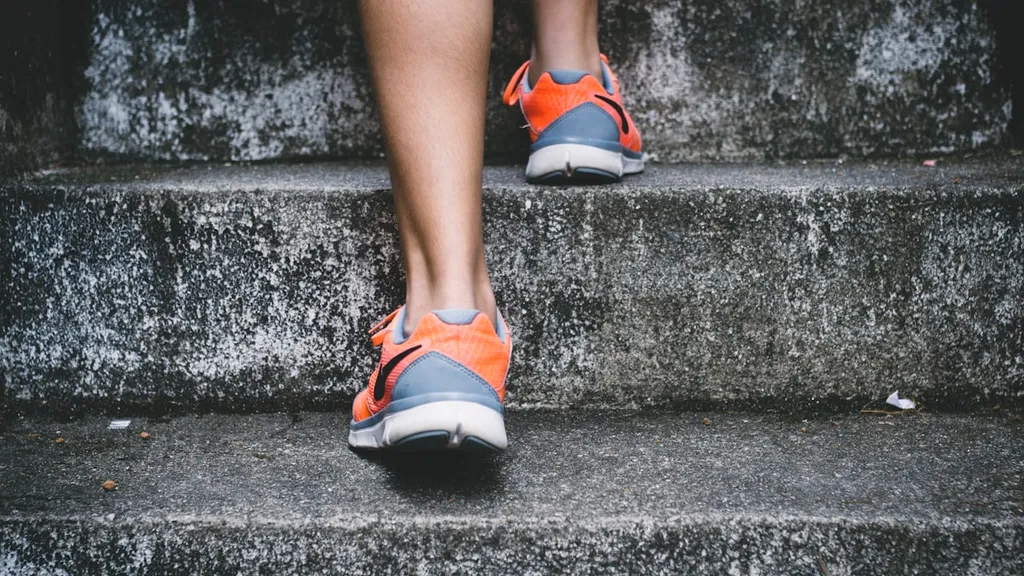
Someone at work asks if you are doing the race up on the hill in spring. The office has booked a week’s skiing in February and there is a spare bed. Your neighbour’s indoor football league restarts in October and they are a player short. None of it was in your plan, and all of it runs on a calendar nobody has shown you.
The short version: the amateur sporting year here has four fixed seasons — running from spring to autumn, a very short beach and water window in July and August, a ski trip in January or February, and indoor leagues right through the winter. Each one has a date you can count backwards from, and eight to twelve weeks of conditioning before that date is the difference between a season and a pulled calf in week two. Entering a Polish race is easy enough, but the forms are in Polish and they ask for a national ID number you may not have.
The four seasons on the local calendar
Running fills the calendar from spring to late autumn, and it is the easiest season to join, because there is nothing to sign and nothing to pay. The free weekly parkrun in Wodna Dolina — Water Valley, parkland on the edge of town — is a timed 5 km every Saturday morning, and it doubles as a fitness checkpoint. Run it once a month while you are building up and you will know whether the plan is working instead of guessing.
Two local races are the ones people here will actually name. The Górski Półmaraton Pętli Tatrzańskiej is a trail half-marathon on Góra Chełmska, the wooded hill inside the city. Do not let the name throw you: it reads like a race in the Tatra mountains, which sit at the opposite end of the country and have nothing to do with it. Take it as a local quirk. The Nocna Ściema — roughly, the night blag — is run in October, in the dark, on the night the clocks go back. For everything else, the regional calendar lives at biegnijmy.pl. Routes and surfaces are a separate subject — see running in Koszalin.
The water and beach season is brutally short: July and August, and not much either side. The Baltic here stays cold well into the summer, and a warm afternoon on the sand tells you nothing about the water. Open-water swimming, beach volleyball and beach running all compress into those few weeks, so there is no gradual build-up to be had. If your summer involves swimming, work your shoulders and upper back in May, not in July.
The ski trip is the season most people underestimate. Polish families head for the mountains in enormous numbers in January and February. The reason is ferie zimowe, the two-week winter school holidays: each region takes a different fortnight, spread across those two months, so the whole country is not away at once. In practice, that means you can find yourself booked onto six consecutive days on the slopes, on legs that spent October to December under a desk. Day three is when the knee goes. If you are skiing in February, start work on your legs in autumn, and build it around quadriceps work under load — braking your way down a hill is what wrecks untrained legs.
Amateur indoor leagues carry the winter. Football, volleyball and basketball, one evening a week from autumn through to spring, played in a hala sportowa — a sports hall. The competition itself is a liga halowa, and that is the phrase to put into a search box or into a message to a club. These games ask you to jump, brake and change direction, which are the three things a week at a desk prepares you for least. We hold no record of which leagues are recruiting; ask at the hall itself, or look for the league on Facebook, where most amateur teams here organise themselves.
Entering a Polish race when you are not Polish
This is the part that stops people, and it is smaller than it looks.
Registration is online, and it happens early. Popular races close weeks or months ahead, and the field limit is real rather than a marketing line. Find the race on its own site or through biegnijmy.pl, and enter as soon as you have decided.
You pay an opłata startowa, an entry fee. It normally rises in tiers as the date approaches, so leaving it late costs you more. You pay by card or bank transfer while you register. We do not print amounts here, because they vary by race and by how early you enter — the figure is always on the race page, quoted in złoty, the Polish currency, written zł and worth roughly 4.3 to the euro.
The form will ask who you are. There is usually a field for a PESEL, the national identity number given to people registered as residents in Poland. If you do not have one, look for a tick-box marked for foreigners, or a field that takes a passport or other document number; most forms have one. If nothing on the form fits what you hold, email the organiser before you pay rather than after.
Check what the race asks for on health. Polish races normally want either a doctor’s certificate or a signed oświadczenie — a declaration that you are taking part at your own risk. The race page tells you which, in the regulamin, the rules of the event. Read it when you enter, not in race week.
You collect your number in person, at the biuro zawodów — the race office — usually open the day before and for an hour or two before the start. Take ID. They hand you a pakiet startowy, a starter pack: number, timing chip, sometimes a shirt. From there on it is a running race like any other.
Counting backwards from the date
Once you have a date, the plan more or less writes itself in reverse.
Weeks one to three: base, and your weak links. Low load, high volume, nothing you would film. Single-leg work, hips, ankles, rotator cuff, trunk. The honest reason this block exists is that tendons and ligaments adapt a great deal more slowly than muscle does. Your muscles will be ready to push long before the connective tissue holding them is, and that gap is where early-season injuries live.
Weeks four to seven: strength. Load goes up, volume comes down. Squats, deadlifts, presses, pull-ups, hip thrusts. Power is built on top of strength, and there is no way around this block.
Weeks eight to ten: power and speed. Jumps, sprints, medicine ball throws. This is the block that shows up in a sprint, a jump, a strike or a change of direction — and it is also the block that hurts people who skipped the first two.
The last week or two: cut volume, hold intensity. Sessions start to look like the sport itself. You want to turn up fresh, not worn out by your own preparation.
Three things matter more than the names of the phases. Raise the volume in steps small enough that you hardly notice them; the usual amateur mistake is doubling the training week inside a fortnight. Treat recovery as part of the plan rather than a gap in it — sleep, and a rest day before any hard session in the sport itself. And expect a good coach to spend the first session hunting for your asymmetries: the left-right strength differences and compensation patterns that decide where you will get hurt.
Short of time? Four to six weeks buys you two blocks and a genuine improvement. Two or three weeks is activation and nothing more — go anyway, but go into the season slower than you want to.
If you never intend to race anything
Most people reading this will never enter a race, and the argument for conditioning does not rest on it.
You still have a season. It is the ski week, the indoor league, the one long hike in June, the summer of hauling a kayak in and out of the water. Every one of those takes you from an ordinary week to an unusual load overnight, and that jump is precisely the pattern that injures amateurs. Professionals train all year with staff watching them; you train irregularly, stop for the winter, then go straight back to full intensity. That is the whole mechanism, and there is not much more to it.
There is a local version of the argument too. The first warm week of spring fills the paths and the gyms here, and by June both are half empty. The people still doing something in the November dark are the ones who will have a season next year.
Getting help with it
Most trainers in Koszalin publish no rates at all. You agree a price at a first meeting, and that meeting is normally free. The few published rates give you the scale: Aleksandra Zwolak, who works out of a gym called Siłownia 16, lists 140 zł (about 33 EUR) for a one-to-one session, and MyGym Koszalin charges 39 zł (about 9 EUR) for a single entry or 129 zł (about 30 EUR) for a 14-day pass. Prices here are always quoted in złoty — zł on a door, PLN online — so treat the euro figures as a rough guide, since the rate moves. For how passes and employer sports cards work, see what training in Koszalin costs.
Start with conditioning coaches in the directory, or with the full trainer directory and gyms and clubs if what you need is somewhere indoors to train over the winter. We hold no record of which coaches work in English, so ask in your first message — and do not assume the answer either way.
One last thing about the timing. Ten weeks before a spring race means starting in the worst of the Baltic winter, in the dark, indoors, doing single-leg work nobody enjoys. That is not bad luck. That is the season.