Diet and training with insulin resistance – what you need to know
Insulin resistance is increasingly common. The right diet and regular exercise can halt its progression. A practical guide to eating and training with IR.
Note: This article is for informational and educational purposes only. It does not replace medical, dietary or physiotherapy advice. Before starting a diet or exercise programme with insulin resistance, PCOS, Hashimoto’s or other metabolic conditions, consult your doctor or specialist.
Insulin resistance (IR) affects an estimated 30–40% of adults in Poland, though many are unaware. The good news: appropriate diet and regular exercise are the most powerful tools available to improve – and in many cases reverse – this condition.
What is insulin resistance?
Insulin resistance is a state in which the body’s cells (muscle, liver, fat tissue) stop responding normally to insulin – the hormone produced by the pancreas to transport glucose into cells.
When cells “ignore” insulin, the pancreas produces more and more to force glucose through. This chronic hyperinsulinaemia gradually leads to:
- Weight gain, particularly around the abdomen
- Chronic inflammation
- Lipid disorders (high triglycerides, low HDL)
- Type 2 diabetes if untreated
- PCOS in women (insulin resistance is the primary driver in most PCOS cases)
Recognising insulin resistance
IR often causes no obvious symptoms for years. Watch for:
- Chronic fatigue, especially after carbohydrate-rich meals
- Difficulty losing weight despite effort and dietary changes
- Strong cravings for sweets, particularly 2–3 hours after eating
- Afternoon drowsiness, brain fog
- Abdominal fat accumulation with otherwise normal or moderately elevated body weight
- Dark skin patches in skin folds (acanthosis nigricans)
Diagnosis: fasting insulin + OGTT (oral glucose tolerance test) with insulin measured at 1 and 2 hours. Results are used to calculate the HOMA-IR index.
Diet for insulin resistance – key principles
A diet for IR is not starvation and it is not carbohydrate elimination. It is built around foods with a low glycaemic index and glycaemic load – those that raise blood glucose and insulin slowly and moderately.
IR-friendly foods (low GI/GL)
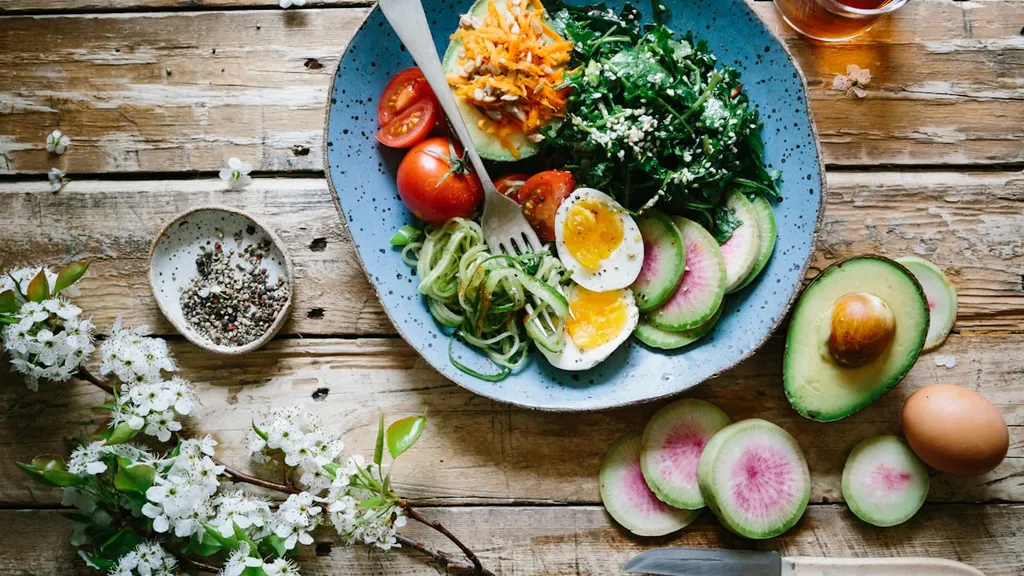
- Non-starchy vegetables – broccoli, cauliflower, spinach, courgette, cucumber, peppers, cabbage, salad leaves. Unlimited.
- Legumes – lentils, chickpeas, beans, tofu. Slow glucose rise, high protein and fibre.
- Lower-GI grains – buckwheat, pearl barley, quinoa. Better choices than white rice or pasta.
- Oily sea fish – salmon, mackerel, sardines. Omega-3 fatty acids reduce insulin resistance.
- Nuts and seeds – small portions; valuable monounsaturated fats.
- Eggs – do not spike insulin; rich in protein and healthy fats.
- Lower-GI fruit – blueberries, strawberries, raspberries, cherries, green apples. Moderate portions.
Foods to limit
- White bread, white rice, white pasta – rapid glucose and insulin spike.
- Sugary drinks, fruit juices, fruit smoothies with large fruit portions.
- Sweets, pastries and cakes – simple sugar plus saturated fat is a poor combination for IR.
- Alcohol – worsens insulin resistance and disrupts liver metabolism.
Other nutritional principles for IR
Regular meal timing: 3–4 meals per day at consistent intervals (every 4–5 hours). Avoid snacking between meals – every food intake raises insulin.
Eating order within a meal: research shows that eating in the sequence vegetables → protein/fat → carbohydrates reduces the post-meal glucose response by up to 30%.
Apple cider vinegar – a teaspoon in water before a meal can modestly reduce the glycaemic response. This has real research support, not just anecdote.
Cinnamon – adding to coffee, oats or yoghurt has documented insulin-sensitising properties.
Exercise for insulin resistance – a powerful tool
Physical activity is one of the most effective “medicines” for insulin resistance. During and after training, muscles absorb glucose independently of insulin – through activation of the GLUT-4 transporter. Exercise literally bypasses the core problem of IR and forces the body to use glucose efficiently.
Improved insulin sensitivity following a single session persists for 24–72 hours – a strong argument for training every 2–3 days rather than once a week.
Strength training – most effective for IR
Skeletal muscle is the body’s largest glucose storage. More muscle mass = greater capacity to “clear” blood glucose after meals. Research consistently shows that strength training outperforms cardio alone in improving insulin sensitivity.
Recommendation: 2–3 sessions per week with free weights or machines, with progressive loading. Compound movements (squats, deadlifts, rows) engage large muscle groups for the greatest metabolic impact.
Moderate-intensity cardio
Walking after meals – 15–30 minutes of brisk walking directly after lunch or dinner literally burns off excess glucose before it accumulates in fat tissue. One of the simplest and most effective habits for IR management.
Running, cycling, swimming – 30–45 minutes 3–4 times per week at moderate intensity (conversational pace). Builds cardiovascular fitness and improves glucose metabolism.
Avoid prolonged sitting
Desk work for 6–8 hours is one of the factors that deepens IR. Stand up every hour, take a short walk, do a few bodyweight squats. Even brief movement breaks meaningfully reduce post-meal glucose spikes.
Do you need a specialist?
Yes – IR requires an individual approach:
Dietitian with IR, PCOS and metabolic disorder experience – creates a meal plan, calculates appropriate calories and macronutrients. In Koszalin: Magdalena Siejak (Dieta-Vita, ul. Hallera 19) specialises in therapeutic diets; Natalia Jasiakiewicz (Pracownia-Diet) and Marta Pawelec (Remedica) also work with metabolic cases.
Personal trainer selecting appropriate exercise type, intensity and frequency. For people with health restrictions in Koszalin: Katarzyna Ejsmont (MoveLife – medical trainer) and Amanda Kisiel (medical personal trainer).
Doctor (internist or diabetologist) – monitors lab results (fasting insulin, glucose, HOMA-IR, lipid panel, thyroid hormones) and decides on pharmacological intervention (metformin where indicated).
Can insulin resistance be reversed?
In many cases – yes. Clinical research confirms that:
- Losing 5–7% of body weight improves insulin sensitivity in over 50% of patients.
- Regular exercise can completely normalise HOMA-IR.
- Switching to a low-GI diet produces measurable improvement within weeks.
The key is consistency and professional support. Do not wait for a diabetes diagnosis – treating insulin resistance early stops the metabolic cascade.
FAQ – insulin resistance, diet and training
Does keto help with insulin resistance? Very low-carbohydrate diets can improve IR short-term but are difficult to maintain long-term. A low-GI diet with regular exercise achieves similar results with better long-term adherence for most people.
Can I eat fruit with insulin resistance? Yes, in moderate amounts and choosing lower-GI options: blueberries, strawberries, raspberries, cherries, green apples. Avoid large portions of grapes, bananas, watermelon and fruit juices.
How long until improved lab results? Improved insulin sensitivity: noticeable after a few training sessions. Lab result improvement (HOMA-IR): typically 6–12 weeks of consistent training combined with dietary changes.
Can IR be reversed without medication? Yes, for mild-to-moderate IR. With advanced IR or co-existing type 2 diabetes, pharmacological treatment (metformin) may be necessary – always after medical consultation.
How often should I exercise with IR? Minimum 3 times per week – 2 strength sessions + 1–2 cardio sessions. A walk after each main meal is a free, simple habit with significant metabolic benefits.